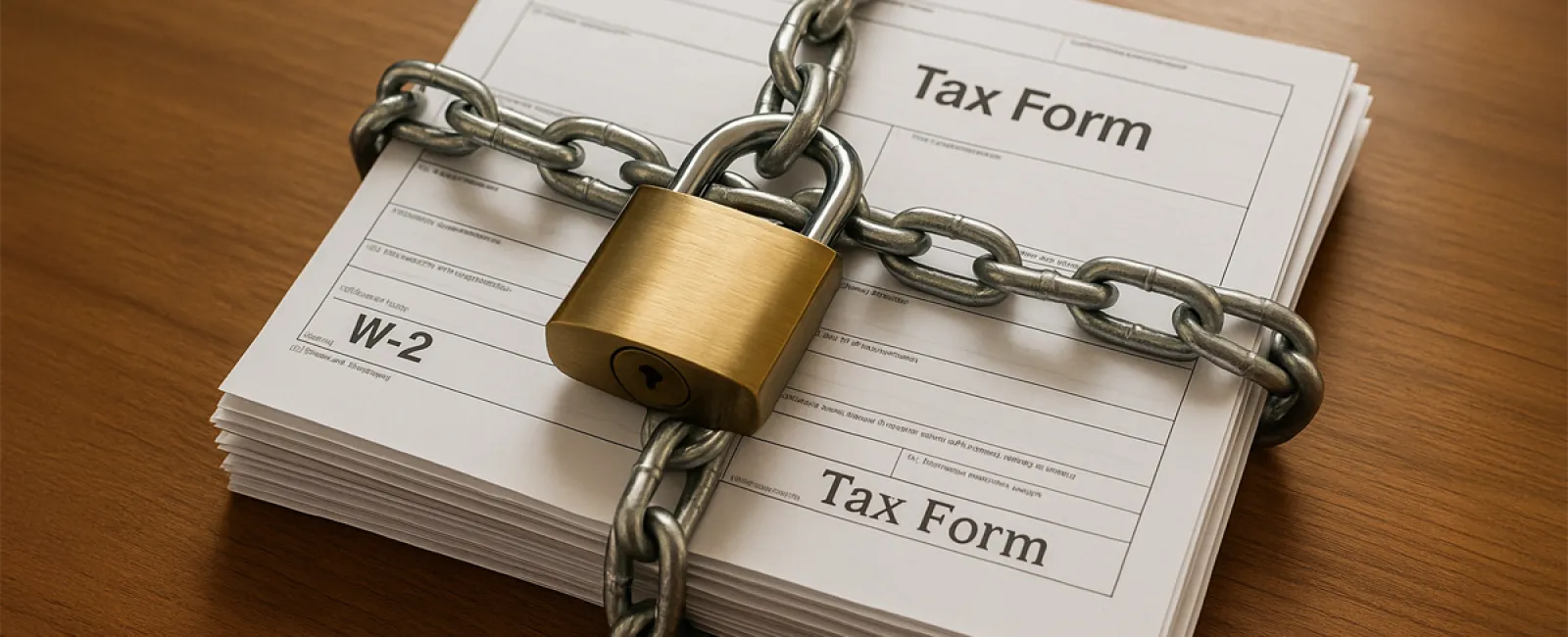
It's February, and tax season is in full swing. Your accountant's workload is increasing, your bookkeeper is gathering paperwork, and everyone is focused on W-2s, 1099s, and looming deadlines.
But here's a critical date that rarely gets marked: the first true tax-season challenge is often not a tax form—it's a scam.
This scam often appears well before April, catching small businesses off guard due to its simplicity and credibility. It might already be lurking in someone's inbox.
Understanding the W-2 Scam: What to Watch For
Here's how it unfolds:
A member of your team, typically in payroll or HR, receives an email seemingly from your CEO, business owner, or a high-level executive.
The message is brief but urgent:
"I need copies of all employee W-2s for a meeting with the accountant. Please send them over ASAP—I'm overwhelmed today."
The email sounds legitimate. Tax season justifies urgency, and the request feels routine.
So, your employee complies and sends the W-2s.
But the truth: the email wasn't from your CEO. It came from a cybercriminal using a forged address or a domain that looks strikingly similar.
Now, this attacker has your employees':
• Full names
• Social Security numbers
• Home addresses
• Salary details
All the info needed for identity theft and fraudulent tax return filings, often done before your employees even file.
Aftermath of the Scam: What to Expect
Typically, victims discover the breach when:
Employees attempt to file their taxes but encounter rejections stating: "A return has already been filed with this Social Security number."
Someone else has already exploited their identity to claim refunds.
Your staff then faces a prolonged battle with the IRS, investigations, credit monitoring, identity theft protection, and extensive paperwork—all due to a seemingly innocent email.
Multiply this risk across your entire payroll. Then consider the impact on trust, your HR team, potential lawsuits, and your business's reputation.
Why This Scam is So Effective
This isn't a clumsy phishing attempt. It succeeds because:
The timing is spot-on; W-2 requests are common in February, reducing suspicion.
The request is believable—unlike demands for money or gift cards.
The urgent tone mirrors a busy tax season, so employees don't question it.
The sender's identity appears authentic because attackers research and use real executive names or accountants.
Employees want to be helpful, especially when they believe the boss is requesting something.
Steps to Safeguard Your Business Against This Threat
The encouraging news is this scam can be stopped with clear policies and a vigilant culture—not just technology.
Implement a strict policy banning the exchange of W-2s via email attachments—no exceptions. Sensitive payroll data should never leave your business's secure environment via email. Any email requests must be denied, even if they appear to come from top executives.
Always confirm sensitive requests through a secondary channel like a phone call, face-to-face conversation, or chat—never just by replying to the email. Use known contact details, not the ones in the suspicious messages. This quick verification can prevent weeks or months of fallout.
Hold a brief, 10-minute meeting now to raise awareness about tax scams, especially with payroll and HR teams. Share what to watch for and proper procedures to follow. This awareness is invaluable protection.
Strengthen security by enforcing multi-factor authentication (MFA) on all payroll and HR systems. MFA acts as the last line of defense if credentials are compromised.
Promote a culture where verification is encouraged and praised. Employees who double-check requests—even from the CEO—should be recognized for their caution. When your team feels empowered to question, scammers lose their advantage.
These five straightforward rules can be implemented immediately and provide strong protection against initial attack waves.
Looking Beyond the W-2 Scam
The W-2 scam is just the start.
Between now and April, be prepared for a surge of tax-related fraud, including:
• Fake IRS alerts demanding urgent payments
• Phishing attempts disguised as tax software updates
• Fraudulent emails from "your accountant" containing harmful links
• Bogus invoices designed to look like legitimate tax expenses
Scammers thrive during tax season due to distractions, fast-paced operations, and financial requests that seem routine.
Businesses that survive tax season without incident don't rely on luck—they are prepared with solid policies, employee training, and protective systems that detect and block suspicious requests before damage occurs.
Is Your Business Ready to Face Tax Season Scams?
If your company already has safeguards and educated staff, you're ahead of the curve.
If not, the time to act is now—not after the first scam affects your business.
If you recognize these risks in your business, schedule a 15-minute Tax Season Security Check.
We'll assess:
• Payroll and HR system access plus MFA
• Your policies for verifying W-2 requests
• Email security measures to detect spoofing
• The key policy adjustment many businesses overlook
If your business is already secure, share this article with someone who might benefit—it could save them from a costly ordeal.
Click here or give us a call at 916-626-4000 to schedule your free 15-Minute Discovery Call.
Because tax season is stressful enough—don't add identity theft to the list.