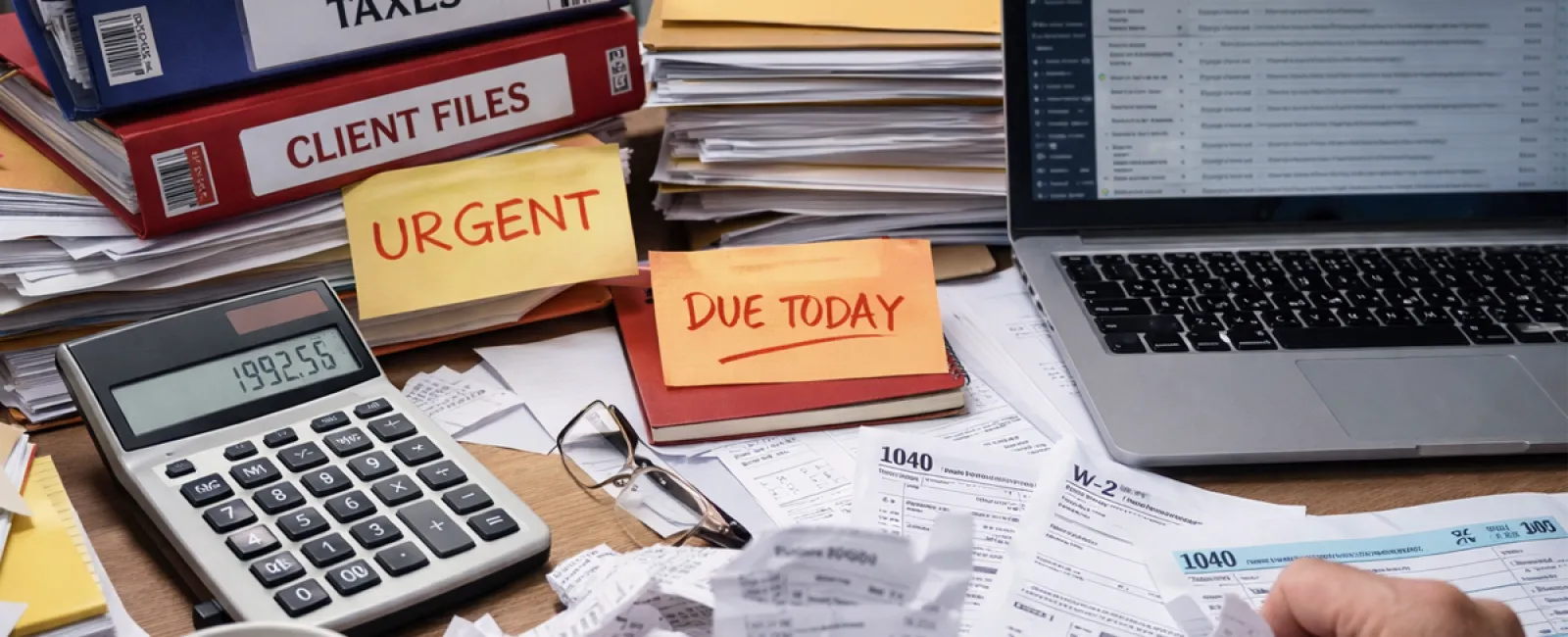
March is the peak of tax season.
Your finance team is overloaded. Your bookkeeper is overwhelmed. Deadlines are pressing hard, and emails flood inboxes faster than anyone can handle.
Everyone is heads-down, pushing through the busiest month of the year.
This scenario isn't new to you.
But it is exactly what hackers expect.
Security experts report a dramatic surge in phishing attacks during tax season, with around a 28% increase in tax-related scam emails in March compared to other months. These scams are subtle, crafted to mimic everyday business communications during your busiest times.
This isn't coincidence.
It's strategic timing.
Here's what's coming and four straightforward strategies to protect your business from becoming an easy mark.
Why the Supply Chain Struggles Under Pressure
Many overlook this crucial point:
Hackers don't only attack accounting firms.
They exploit the widespread chaos surrounding tax season.
When tax season hits:
- Clients hurriedly send sensitive documents
- Employees skip critical checks to keep pace with demand
- "Just send the file" replaces cautious verification
- Verification steps are often skipped due to workload pressures
The entire process accelerates.
And when speed takes over, mistakes happen.
Hackers target busy, rushed businesses—not careful, methodical ones.
March is the perfect storm.
Examples of Real-World Attacks
This isn't fiction.
These phishing emails look just like everyday correspondence.
- Email impersonating your accountant requesting a resend of W-2s due to a transmission error
- Message from a vendor about updated bank details needing urgent confirmation
- DocuSign requests for urgent tax document signatures
- Urgent travel-related requests from "your CEO" needing immediate assistance
These requests appear legitimate—because they're designed to.
They blend in seamlessly with normal March business communications.
Why People Fall for These Attacks
This isn't carelessness.
It's human nature.
Faced with overflowing inboxes and tight deadlines, people scan rather than read. They make assumptions and respond quickly.
Scammers know this.
Their emails target busy individuals who miss small but critical details. They don't need recklessness—just your busyness.
And in March, everybody is busy.
Four Easy Steps to Shield Your Business
The great news: protecting yourself doesn't require complex technology or a dedicated security team.
Simple, deliberate habits during busy periods make all the difference.
1. Confirm bank changes by phone
When a vendor emails about updated bank info, don't reply. Instead, call a trusted number to verify.
This one habit fends off costly scams.
2. Pause on urgent info requests
Urgency signals caution, not haste.
If someone demands W-2s, tax forms, or financial files immediately, take a moment to verify.
Genuine senders understand a brief delay; scammers won't.
3. Validate urgent requests via alternative contacts
If an email insists on urgency, confirm through a call, text, or internal message.
A quick second check can stop costly errors.
True urgency will withstand the brief scrutiny, fake urgency won't.
4. Alert your team to the risks
Remind your team that tax season spikes scam attempts.
Encourage them to slow down, double-check, and ask questions if anything seems off.
This permission to pause can save you valuable time and money.
Key Takeaways
Tax season is stressful enough—don't let phishing scams add to the burden.
These attacks aren't sophisticated but are precisely timed.
They rely on rushed decisions, assumptions, and everyone hustling through March.
You don't need to overhaul your entire process.
Simply slow down when it matters and verify urgent requests.
Often, that's enough to protect your business.
Quick Busy-Season Security Check
Your company may already have strong safeguards—if so, excellent.
But if tax season puts your team into reactive mode or you're unsure how urgent requests are handled, consider a quick security review with a free 15-Minute Discovery Call.
No gimmicks, no pressure—just a clear assessment of small habits that prevent major problems.
If this message doesn't apply to your business, please forward it to someone who could benefit.
Click here or give us a call at 916-626-4000 to schedule your free 15-Minute Discovery Call.